How to Choose an Infrared Sauna Without Wasting Money
If you’re trying to figure out how to choose an infrared sauna, the number of options and marketing claims can get overwhelming fast.
And for good reason — when used consistently, they can become one of the simplest recovery tools you can add to your routine.
But if you’ve started researching infrared saunas, you’ve probably noticed something pretty quickly:
There are a lot of options… and a lot of marketing.
Some cost $1,000.
Some cost $7,000.
Some claim miracle health benefits.
So how do you actually choose a good one without wasting money on the wrong setup?
After spending way too much time researching infrared saunas — and eventually buying one myself — I realized most buying advice focuses on the wrong things.
This guide will walk through what actually matters when choosing an infrared sauna, what you can safely ignore, and how to avoid some very common (and expensive) mistakes.
Who This Guide Is For
This guide is for people who:
- Work out regularly
- Deal with muscle soreness or joint stiffness
- Want a simple recovery tool at home
- Are trying to decide whether an infrared sauna is worth the investment
It’s not for people looking for spa luxury or high-end wellness gadgets just for aesthetics.
This is about recovery, consistency, and practicality.
Why So Many People Buy the Wrong Sauna
Most buyers get overwhelmed by features.
Learning how to choose an infrared sauna comes down to focusing on a few practical factors rather than marketing features.
Manufacturers throw around terms like:
- Full spectrum
- Near infrared
- Chromotherapy
- Medical grade emitters
- Detox technology
Some of these features matter.
Many of them don’t matter nearly as much as the marketing suggests.
What actually determines whether you’ll get value from a sauna is much simpler:
- Will you actually use it consistently?
- Does it fit your space and electrical setup?
- Does it heat reliably and comfortably?
If those three things are solved, you’re already ahead of most buyers.
The 5 Things That Actually Matter When Choosing an Infrared Sauna
1. Size (Two Person vs One Person)
This is one of the biggest decisions.
Most people assume they need a larger sauna.
But in reality, two-person models tend to be the sweet spot.
Why?
They usually:
- Heat faster
- Fit comfortably in small spaces
- Require standard home electrical outlets
- Cost significantly less
One-person saunas can feel cramped.
Three- or four-person saunas are often overkill for home recovery unless you truly plan to share it regularly.
For most people, a two-person infrared sauna hits the best balance.
2. Electrical Requirements
This is one of the most overlooked details.
Some saunas require:
- Standard 120V outlet (plug and play)
- 240V outlet (like a dryer or stove)
If a sauna requires 240V, you may need:
- An electrician
- A new outlet installation
- Additional cost
That can easily add $500–$1,500 to the total setup.
If simplicity matters to you, look for a sauna that runs on standard household power.
3. Heating Panels and Temperature Range
Infrared saunas heat the body differently than traditional saunas, which is why the temperatures are lower.
A traditional sauna heats the air using a stove and hot rocks.
Air temperatures typically reach 150–195°F, and your body warms up through exposure to that hot air.
An infrared sauna works differently.
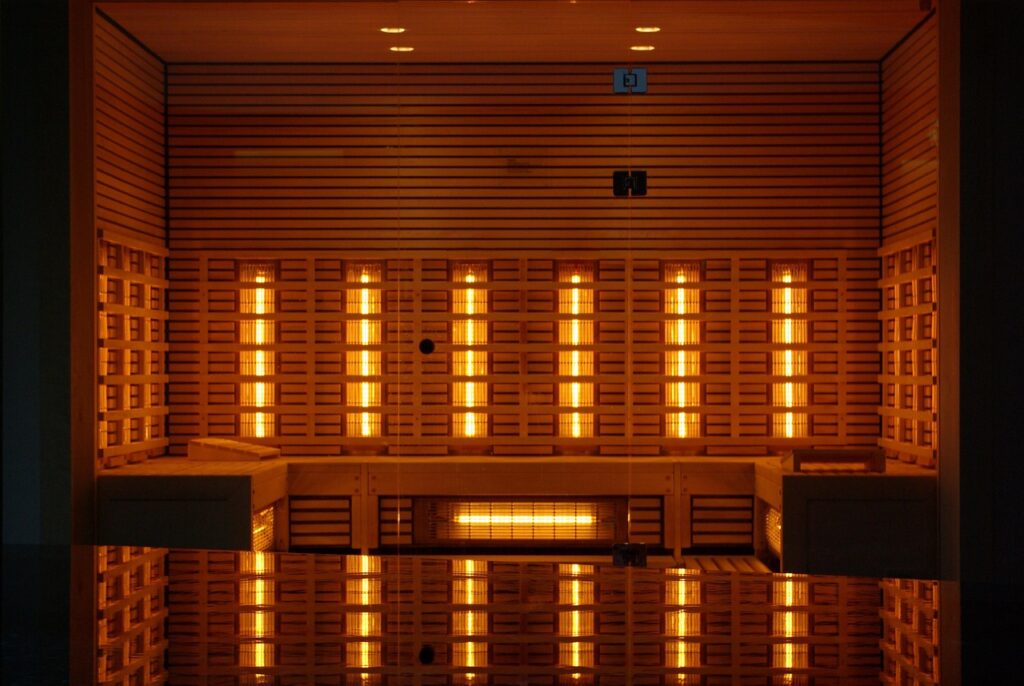
Instead of heating the air first, infrared panels emit radiant heat that warms the body more directly. Because of this, the surrounding air temperature is usually lower — typically 110–150°F.
This is completely normal and doesn’t mean the sauna is “less effective.”
In practice, most people find infrared sessions more comfortable because:
- Breathing is easier
- Heat builds gradually
- You can stay in longer sessions
For recovery purposes, the goal isn’t extreme heat — it’s consistent use and comfortable sessions.
A sauna that heats evenly to around 120–145°F is usually more than enough for most people.
4. Build Quality and Materials
This is where you should pay attention.
A good sauna should have:
- Solid wood construction
- Reliable door sealing
- Quality heating panels
- Simple, durable controls
Most home saunas use woods like:
- Hemlock
- Cedar
- Basswood
The specific wood matters less than overall build quality.
Cheap units sometimes feel flimsy, which can affect heat retention and longevity.
5. Warranty and Customer Support
This is the boring part that most people ignore.
But it matters.
A good infrared sauna company should offer:
- Panel warranty
- Electrical component warranty
- Clear customer support
Saunas are simple machines, but heating panels and controls can fail over time.
A strong warranty gives you peace of mind.
Features That Sound Important (But Usually Aren’t)
Here are a few things that get heavily marketed but rarely determine whether a sauna is actually good.
Chromotherapy Lighting
Colored lights inside the sauna.
Nice? Sure.
Necessary for recovery? Not really.
Bluetooth Speakers
Some saunas include built-in audio systems.
If that matters to you, great.
But realistically, most people just bring their phone or use a nearby speaker.
“Medical Grade” Marketing
You’ll see this phrase everywhere.
It sounds impressive, but it’s often just marketing language.
Focus on reliability and build quality, not buzzwords.
The Biggest Mistake People Make
The most common mistake isn’t buying the wrong sauna.
It’s buying a sauna that creates friction to use.
Examples:
- Too large for the space
- Takes too long to heat
- Complicated setup
- Electrical upgrades required
If using your sauna becomes inconvenient, you’ll use it less.
And consistency is where the benefits actually show up.
The best sauna is the one that becomes part of your routine.
Budget Expectations
Here’s a rough idea of typical price ranges:
| Category | Price Range |
|---|---|
| Budget portable | $800 – $1,200 |
| Entry home sauna | $1,200 – $2,000 |
| Mid-range | $2,000 – $3,500 |
| Premium | $4,000+ |
Most people find the best value in the $1,500–$3,000 range.
That’s where you typically get:
- Solid construction
- Reliable heating panels
- Good warranty
- Comfortable space
Without paying luxury prices.
What I Learned After Buying One
Before I bought my infrared sauna, I assumed the most important thing would be temperature or fancy features.
But after using one consistently, what actually mattered was much simpler:
- It heats up reliably
- It’s easy to step into after a workout
- It removes friction from recovery
Recovery works the same way training does.
One session helps.
But consistent sessions change how you feel day to day.
That’s the real value of having a sauna at home.
If You’re Considering an Infrared Sauna
Focus on these questions:
- Does it fit your space?
- Does it run on standard power?
- Is the build quality solid?
- Is the size realistic for your use?
- Will you actually use it regularly?
If the answer to those questions is yes, you’re probably looking at a good option.
Ignore most of the marketing noise.
Simple setups that you’ll use consistently almost always win.
Related Recovery Guides
If you’re researching infrared saunas, these guides may also help:
Related Recovery Guides
If you’re researching infrared saunas, these guides may also help:
- If you’re new to heat therapy, start with this guide on
Infrared Sauna for Recovery: A Beginner’s Guide - If you’re trying to decide between heat and cold therapy, read
Cold Plunge vs Infrared Sauna: Which Is Better for Recovery? - Not sure how often to use one? This guide explains
How Often Should You Use an Infrared Sauna for Recovery? - And if you want to combine multiple recovery tools together, see
A Simple Weekly Recovery Routine That Actually Works