A Simple Weekly Recovery Routine That Actually Works
If your current recovery routine is basically “work out hard and hope for the best,” you’re not alone.
A lot of people train hard, stay busy, and then wonder why they feel stiff, sore, tired, and half-broken by the middle of the week. The issue usually is not effort. The issue is that recovery becomes an afterthought.
And to make it worse, most recovery advice online is either too extreme, too expensive, or too unrealistic to actually stick with.
You do not need a full-blown biohacking lab to recover better.
You need a simple weekly recovery routine that fits real life and actually gets used.
That is what this post is about.
What a weekly recovery routine is supposed to do
A good recovery routine should help you:
- reduce soreness and stiffness
- feel better going into your next workout
- support better sleep
- keep your body from feeling beat up all week
- make recovery easier to stay consistent with
That last one matters more than people think.
Because the best recovery routine in the world is useless if it is so complicated that you stop doing it after three days.
The biggest mistake people make with recovery
Most people make one of two mistakes.
They either do almost nothing and just “push through it,” or they swing too far the other way and try to turn recovery into a part-time job.
Neither is necessary.
Recovery does not need to be extreme to be useful.
It just needs to be repeatable.
That means a few simple things done consistently will usually beat random heroic efforts every single time.
The basics still matter most
Before getting into sauna, cold plunge, mobility, or anything else, let’s be honest about the obvious stuff.
If your sleep is bad, your hydration is poor, your training volume is too high, and your nutrition is inconsistent, no recovery tool is going to magically save you.
That does not mean recovery tools are useless.
It means they work best when they support the basics instead of trying to replace them.
So before worrying about the perfect setup, make sure you are at least covering the boring stuff:
- decent sleep
- enough water
- enough food
- enough protein
- some level of training sanity
Not exciting. Still true.
If you’re building this at home
A weekly recovery routine gets much easier to follow when your setup removes friction instead of adding it.
For most people, that means starting simple:
- one anchor tool (usually sauna or cold plunge, not both at once)
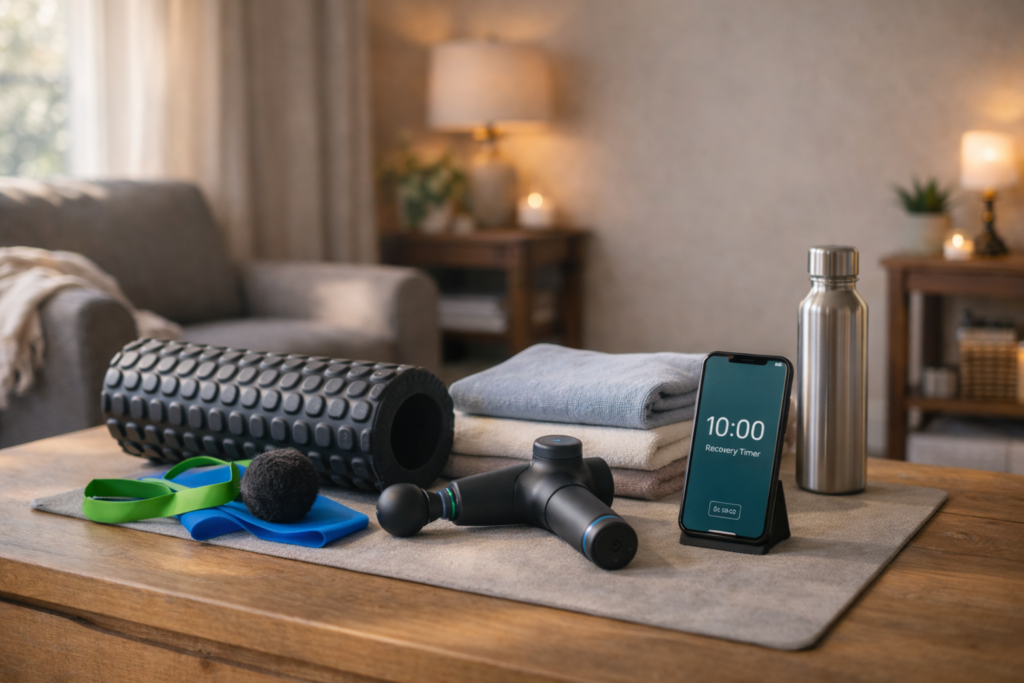
- one mobility or tissue-work tool
- one realistic weekly rhythm you can repeat
If you want the full setup version of this, start here: The Best At-Home Recovery Setup for Busy Schedules.
If you’re still deciding between heat and cold, read this next: Cold Plunge vs Infrared Sauna: Which Is Better for Recovery?
If you’re new to recovery tools, keep this simple.
Do not try to build an elite routine in week one.
Start with the version you can actually follow.
If you’re newer to infrared sauna, start here: A Beginner’s Guide to Infrared Sauna.
If you’re newer to cold exposure, start here: Cold Plunging for Beginners.
A simple weekly recovery routine that actually works
This is the kind of routine that works well for people who train a few times per week, have a normal life, and want to feel better without making recovery more complicated than the workouts.
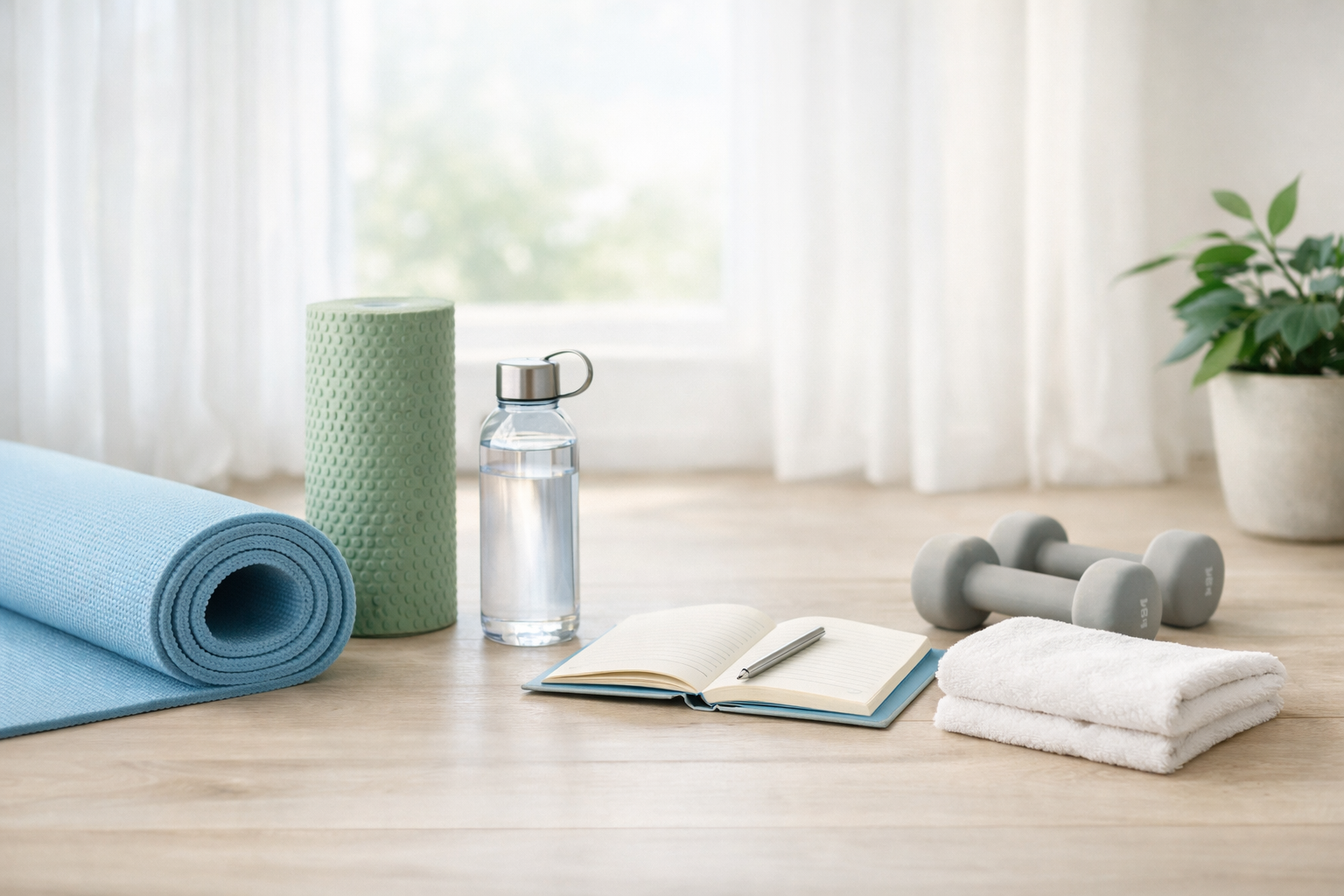
1. Move every day for 10 to 15 minutes
This does not mean crushing another workout.
It means doing enough movement to keep your body from turning into concrete.
That can be:
- walking
- light stretching
- easy mobility work
- an easy bike ride
- a short recovery circuit
- simple movement first thing in the morning or later in the evening
The goal is not intensity.
The goal is circulation, joint movement, and staying loose enough that your body does not feel worse as the week goes on.
This alone helps more than people think.
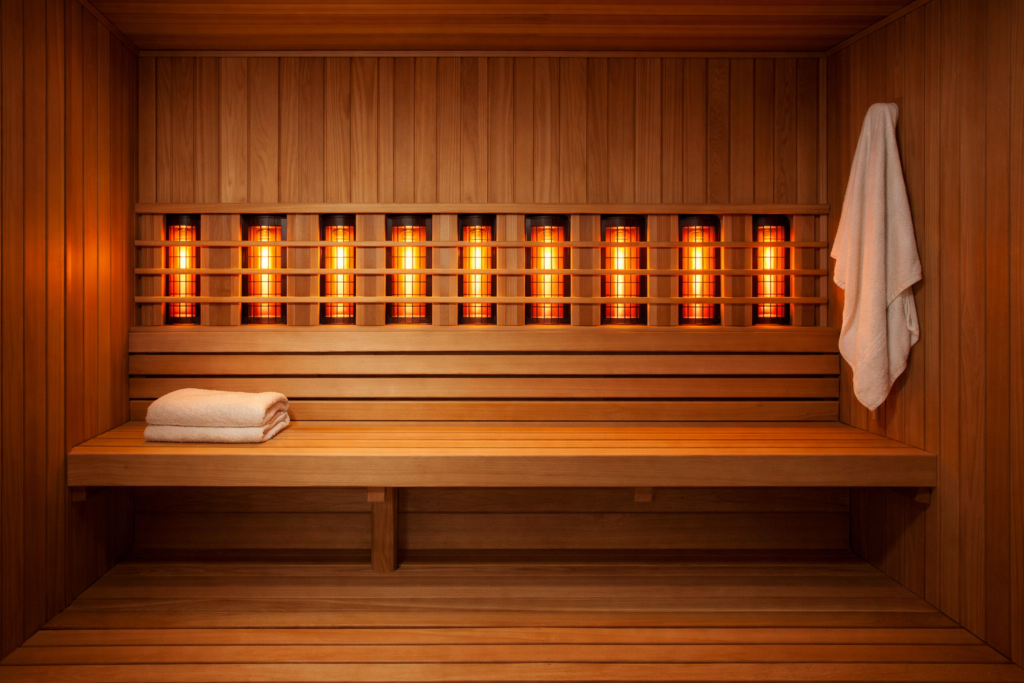
2. Use sauna 2 to 4 times per week if you have one
If you have access to an infrared sauna, this is where it fits in well.
You do not need to use it every day.
For most people, a few sessions per week is plenty.
Sauna works best when it is used as part of a consistent routine, not as some random “I did one session so now I’m fixed” event.
Good times to use it are:
- after a harder workout
- on a day when you feel beat up
- in the evening when you want to relax
- on a lighter recovery day
The main point is to make it realistic.
If you are always trying to do the perfect sauna session, you will eventually skip it. If you treat it like a simple part of your week, you are much more likely to stick with it.
For more on infrared saunas, look here Infrared Sauna for Recovery: A Beginner’s Guide
3. Use cold plunge 1 to 3 times per week when it makes sense
Cold plunge can be useful, but it does not need to happen every day to be effective.
This is where people get weird.
Cold exposure is a tool. Not a personality trait.
It makes the most sense when:
- soreness is high
- you want to feel fresher after hard training
- you want a mental reset
- you are using it intentionally, not just because suffering feels productive
That is the key.
Use it with a purpose.
Not because the internet convinced you that being cold all the time makes you disciplined.
If you feel good with one to three cold sessions in a week, great. If you do less than that but use it strategically, that is also fine.
If you want the full breakdown on how heat and cold compare, read this next: Cold Plunge vs Infrared Sauna: Which Is Better for Recovery?
4. Keep 1 to 2 lower-stress recovery days each week
This does not mean doing absolutely nothing.
It means backing off enough to let your body absorb the work you already did.
A lower-stress recovery day might include:
- walking
- mobility
- stretching
- sauna
- more sleep
- easier movement overall
This is where a lot of people mess up.
They only respect effort when it feels hard.
But some of the most useful recovery happens when you stop trying to win every day and give your body a chance to catch up.
5. Build the routine around your real week
This is the part that actually makes the routine work.
It has to fit your life.
Not your fantasy life. Your real one.
That means your recovery routine should work whether you trained hard, had a busy workday, slept badly one night, or have other responsibilities.
A routine that looks impressive but does not survive a normal week is not a good routine.
A simple one that you can actually repeat is.
What to buy first vs later
If you are building a weekly recovery routine from scratch, buy in this order:
Buy first:
- one anchor tool you will actually use
- one simple mobility or tissue-work tool
- a timer
- a towel / mat / basic accessories that remove friction
Buy later:
- premium upgrades
- extra gadgets
- a second major recovery tool
- anything that makes the setup look cooler but doesn’t make it easier to use
If you want a buyer-focused breakdown, start here:
- Best At-Home Infrared Saunas for Recovery
- Best Cold Plunge Tubs for Home Recovery
- DIY Cold Plunge vs Store-Bought Cold Plunge: Which Is Right for Recovery?
A sample weekly recovery routine
Here is a simple example that works well for a lot of people.
Monday
Workout
10 minutes of light mobility later in the day
Tuesday
Workout
Sauna session in the evening
Wednesday
Recovery-focused day
Walk, light stretching, earlier bedtime
Thursday
Workout
Optional cold plunge if soreness is building
Friday
Workout or lighter training day
Short movement or mobility session
Saturday
Sauna or recovery-focused session
Easy movement, nothing extreme
Sunday
Low-stress day
Walk, stretch, reset for the week
That is enough.
Not flashy. Not extreme. But useful.
If you use both sauna and cold plunge
You do not need to use both every week just to say you have a “real” recovery routine.
But if you do have both, a simple way to think about it is this:
- use sauna when you want heat, relaxation, and a consistent recovery habit
- use cold plunge when soreness is high or you want to feel fresher after harder training
- use both only if it fits your week and genuinely helps you feel better
You do not need to overcomplicate it.
You are trying to recover better, not audition for a wellness documentary.
When contrast therapy makes sense
If you already know you like both sauna and cold plunge, contrast therapy can be a useful option.
But it is not required for a good weekly recovery routine.
For most people, sauna or cold plunge alone makes more sense most of the time. Contrast therapy is better as an occasional full recovery session, not a default habit.
If you want the full breakdown, read this next: Contrast Therapy: What the Science Says (and What I’ve Personally Learned).
What matters most in a weekly recovery routine
If you strip all of this down, here is what matters most:
Consistency beats intensity
A basic routine you repeat every week will usually beat a more advanced routine you rarely follow.
Sleep still does a lot of the heavy lifting
No recovery tool makes up for terrible sleep.
Heat and cold should be used with a purpose
Sauna and cold plunge can both help, but they work best when they fit into a broader routine instead of being treated like magic fixes.
Lower-stress days are part of progress
Recovery days are not wasted days. They are part of what allows better training to continue.
Simpler usually works better
If your plan is too complicated, you will stop doing it.
That is not a motivation problem. That is bad design.
FAQ
How many recovery days should I have each week?
For most people, 1 to 2 lower-stress recovery days per week is a good place to start. That gives your body some room to recover without turning the whole week into downtime.
Should I sauna every day?
You can, but most people do not need to. A few sauna sessions per week is enough for many people, especially when the rest of their routine is solid.
See my post here on the validity of using infrared saunas. Infrared Sauna for Recovery: Is It Worth It?]
Should I cold plunge every day?
Not necessarily. Cold plunge is usually more useful when it is used intentionally rather than obsessively. A few times per week is enough for most people.
What if I only have 10 minutes?
Then use 10 minutes. A short walk, a little stretching, or quick mobility work still counts. A simple routine you actually do is better than a perfect one you keep putting off.