A Beginner’s Guide to Infrared Sauna
If you’re new to infrared sauna for recovery, start here.
This is recovery — not a toughness contest. If you approach it correctly, it becomes one of the most effective and sustainable tools in your routine. If you approach it incorrectly, you can absolutely dig yourself into a dehydration hole fast.
Let’s get this straight from the beginning.
If You’re Buying Your First Infrared Sauna…
Don’t make “perfect” your first goal.
If you’re just getting started, what matters most is:
- whether you will actually use the sauna consistently
- whether the setup fits your space and routine
- whether heat-up time and comfort make it easy to repeat
- whether the sauna feels simple enough to become a habit
A repeatable setup beats an impressive setup you barely use.
If you already know you want a home sauna that is easier to stick with, start here: Best At-Home Infrared Saunas for Recovery.
If you’re trying to build a simple, realistic routine around work, training, and life, start here: The Best At-Home Recovery Setup for Busy Schedules.
Hydration Is Not Optional
You must increase hydration when you start using a sauna.
Not just water.
Water + sodium + electrolytes.
You are sweating more than you were before. That means:
- More fluid loss
- More sodium loss
- More electrolyte loss
If you keep drinking the same amount of water you did before adding sauna sessions, you are under-hydrating. Period.
Whatever your previous intake was — increase it.
Dehydration sneaks up on you. Headaches, fatigue, sluggish recovery, that “off” feeling — it’s usually not mysterious. It’s fluid and salt loss.
Do not underestimate this.
Why Infrared Is Beginner-Friendly
Infrared saunas are efficient.
- They use less energy than traditional saunas
- They heat up relatively quickly
- They feel more tolerable at lower ambient air temps
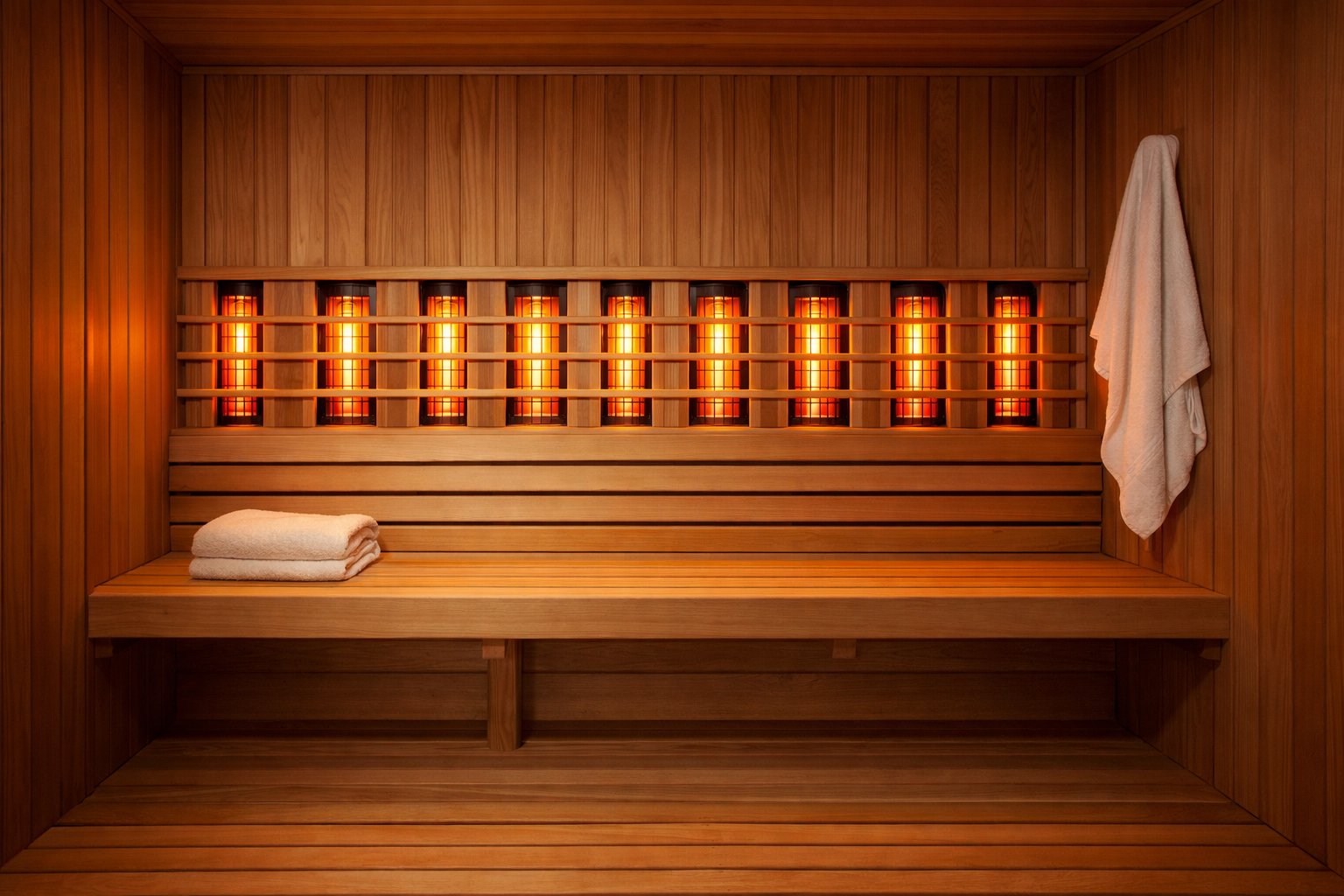
My unit heats up in about 30 minutes when empty.
It takes slightly longer if someone is inside during warm-up.
That’s manageable. It doesn’t require a 60–90 minute lead time like many traditional units.
This makes consistency easier — and consistency is what drives results.
If you’re still deciding between types, I break down the full comparison in Infrared vs Traditional Sauna for Recovery so you can choose based on your goals.
If you want the simplest version:
- if you want the easiest habit to stick with, choose comfort and convenience over “hardcore” features
- if you want better recovery consistency, focus on fit, usability, and repeat sessions
- if you want to avoid wasting money, do not overbuy before you know you’ll use it
- if you want the best next step after this guide, go here: Best At-Home Infrared Saunas for Recovery
For most beginners, the right question is not:
“What is the most advanced sauna?”
It is:
“What sauna will I actually use every week?”
Temperature & Time: Be Smart
This is not “no pain, no gain.”
You do not need to max out the dial to get benefits.
My sauna will reach close to 150°F.
I never go above 140°F.
Why?
Because I get everything I need between 130–140°F. There’s no reason to tax my system harder than necessary. This is supposed to be recovery.
Session length:
- Usually 20–30 minutes
- Never longer than 30 minutes
If you’re new:
- Start lower
- Start shorter
- Build gradually
Adaptation matters. Give your body time to adjust.
Best Time of Day to Use It
There is no bad time.
But there are strategic times.
1. Immediately After a Workout
This is my preferred window.
Finishing a workout and stepping directly into the sauna:
- Enhances relaxation
- Extends circulation benefits
- Feels like a reward
I look forward to it. That matters.
2. A Few Hours Before Bed
Some people use it to wind down and potentially support sleep.
I personally use it mostly post-workout, but if sleep optimization is your primary goal, evening sessions may make more sense.
Your timing depends on your goal:
- Workout recovery → Post-training
- Sleep focus → Early evening
- General wellness → Whenever it fits your schedule
Consistency beats perfect timing.
Red Light: Stack the Benefits
If you haven’t purchased a sauna yet, get one with integrated red light.
If you’re still shopping, I outline the units I recommend in My Top 5 Infrared Sauna Picks for Home Recovery, including options with built-in red light.
Why not layer benefits?
Infrared heat + red light therapy gives you:
- Thermal stress adaptation
- Potential tissue recovery support
- One session, two modalities
It’s efficient. And efficiency makes adherence easier.
What To Do Inside
Bring:
- One towel to sit on
- One towel to wipe sweat
If your unit is large enough, you can do light stretching. I’ll occasionally stretch depending on soreness levels, but most of the time it’s a decompression window.
And leave your phone out.
Electronics heat up just like you do. While it may not cause immediate failure, repeated exposure to high temps is not ideal for devices. More importantly — this is recovery time. Detach.
A Simple Starter Framework
If you’re brand new:
- 120–130°F
- 15–20 minutes
- 2–3x per week
- Increase hydration immediately
After 2–3 weeks, adjust based on how you feel.
There’s no trophy for going hotter or longer.
What To Do Next
If this guide helped you understand the beginner side of infrared sauna use, the next practical step is choosing the right setup.
Start here:
Learn first. Buy second. Stick with it long enough to benefit.
Final Take
Infrared sauna use should enhance your recovery — not drain you.
Hydrate aggressively.
Stay in the 130–140°F range.
Keep sessions under 30 minutes.
Time it according to your goal.
No time is a bad time.
But some times are smarter than others.
Use it with intention and it becomes one of the easiest recovery wins you’ll ever add.