Cold Plunge Temperatures: What’s Safe, Effective, and Sustainable
Cold plunge temperature matters — but not the way most people think.
Most beginners assume colder is always better, longer is always better, and suffering more means getting more benefit.
That is usually wrong.
The best cold plunge temperature is the one that gives you the recovery benefit you want without creating unnecessary stress, dread, or inconsistency.
This guide breaks down:
- what different temperature ranges are actually good for
- how long to stay in at each range
- why longer is usually not better
- how beginners should think about temperature control
- when it makes sense to upgrade from a basic setup
If you are still figuring out whether cold plunging even fits your life, start here: Cold Plunging for Beginners: How I Figured Out If This Was Real or Just Another Wellness Trend.
If You’re Buying Your First Setup
Do not make temperature precision your first obsession.
If you are just getting started, what matters more is:
- whether you will actually use the setup
- whether the water stays reasonably clean
- whether you can control the temperature enough to stay consistent
- whether the setup creates friction or removes it
A repeatable setup beats a “hardcore” setup almost every time.
If you already know you want a home setup that is easier to manage, start here: Best Cold Plunge Tubs for Home Recovery.
If you are still deciding between starting cheap or buying something more complete, read: DIY Cold Plunge vs Store-Bought Cold Plunge: Which Is Right for Recovery?
Quick Temperature Decision Shortcut
If you want the simplest version:
- 50–55°F: easiest place for beginners to build consistency
- 45–50°F: strong recovery and alertness zone for most people
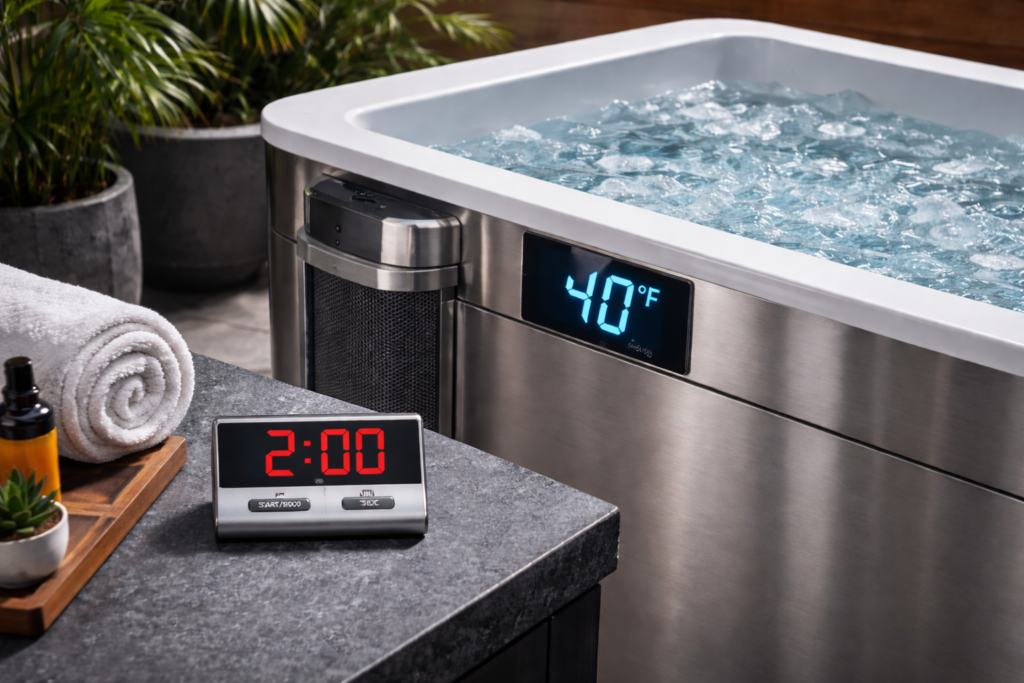
- 40–45°F: more intense, better for experienced users who already know they tolerate cold well
- below 40°F: usually unnecessary for most recovery-focused people
For most people, the right question is not:
“How cold can I go?”
It is:
“How cold can I go and still recover well, stay consistent, and not hate the process?”
Beginner Safe Cold Plunge Temperature Ranges (Quick Start)
If you’re new to cold plunging, the biggest mistake is starting too cold, too fast. More cold is not better — especially early on. The goal is controlled exposure that challenges your system without overwhelming it.
Here’s a safe, simple starting framework most beginners can tolerate well:
Beginner range:
• 50–59°F (10–15°C)
This range provides clear recovery benefits while keeping stress manageable. You should feel cold, but still able to control your breathing.
Intermediate range:
• 45–50°F (7–10°C)
Once you’ve built consistency and tolerance, slightly colder temperatures can increase the stimulus. This range feels uncomfortable but sustainable for short sessions.
Advanced range:
• Below 45°F (7°C)
This is not necessary for recovery and is best reserved for experienced users with specific goals. Colder does not automatically mean better results.
How long to stay in:
For beginners, start with 1–2 minutes, focusing on calm nasal breathing. Over time, you can work toward 2–4 minutes total, broken into shorter rounds if needed.
How often to plunge:
2–4 sessions per week is more than enough for most people. Consistency matters more than intensity.
If you’re unsure whether cold exposure is the right choice for your recovery goals, comparing it with heat-based approaches can help you decide what fits your body best.
Understanding temperature is only one part of effective cold exposure — the benefits depend on how and why you’re using it.
That is also why setup matters more than people think.
If your tub constantly pushes you toward chasing colder numbers instead of consistent recovery, you are solving the wrong problem.
A better home setup should make recovery easier to repeat, not just easier to brag about. Start here: Best Cold Plunge Tubs for Home Recovery.
What Matters More Than Exact Temperature
People obsess over the number on the display.
In practice, these usually matter more:
- consistency
- clean water
- low friction setup
- realistic session length
- how you feel later that day and the next day
- whether the routine supports recovery instead of draining it
A mediocre setup you use consistently is more valuable than a perfect setup you avoid.
Why I Take This Approach to Recovery
I started Smart Recovery Lab because this is my personal journey to be well.
I want to continue training, pushing myself, and becoming the best version of me without paying for it later as I age. Friends and family started asking questions, looking for advice, and eventually I realized this was worth sharing.
Recovery isn’t about doing the hardest thing possible.
It’s about doing the right thing consistently.
That said — recovery shouldn’t be easy.
Your cold plunge should feel cold enough to suck, cold enough to make you want to get out… without actually getting out.
It should be difficult. Controlled. Intentional.
If you’re new to cold exposure, it helps to understand the foundational benefits first, which I break down in this post on the benefits of cold plunging.
If you do one hard thing early in the day — and for many people, the cold plunge is the hardest part — the rest of the day feels easier by comparison. That’s not just physical recovery; that’s mental training.
The goal is stress you can recover from — not punishment.
What the Science Says About Cold Plunge Temperatures
When you remove the hype and look at peer-reviewed research, sports performance labs, and expert guidance from people like Andrew Huberman, the data is surprisingly consistent.
Effective Cold Plunge Temperature Range
50–59°F (10–15°C)
This range is associated with:
- Reduced inflammation
- Improved circulation
- Nervous system resilience
- Faster perceived recovery
Colder is not automatically better. It’s just colder.
What Different Temperature Ranges Actually Do
50–59°F: The Sweet Spot
- Strong recovery benefits
- Manageable stress response
- Easier to repeat consistently
- Used by most professional recovery labs
This is where the majority of people should spend most of their time.
40–49°F: Advanced and Occasional
- Stronger cold shock response
- Increased cardiovascular and nervous system stress
- Useful for experienced users
This range can be effective, but it should be used sparingly, not daily.
Below 40°F: High Stress, Low Return
- Intense gasp reflex
- Higher blood pressure spikes
- Increased dizziness risk
- No clear added recovery benefit
This range is popular online, but rarely used in professional recovery settings for a reason.
Time Matters More Than Toughness
You don’t get extra recovery points for staying in longer than planned.
Recommended Session Length
- 2–5 minutes per session
- Shorter sessions at colder temperatures
- Longer sessions at warmer temperatures
Most benefits occur within the first few minutes. After that, you’re mostly testing willpower.
Weekly Cold Exposure Guidelines
Based on research and real-world recovery protocols:
- Total weekly exposure: 11–15 minutes
- Spread across 2–4 sessions per week
This aligns closely with protocols discussed by Andrew Huberman and used in sports performance environments.
More exposure does not equal better results. Better timing and consistency do.
That is why understanding how often you should cold plunge matters more than pushing longer or colder sessions.
What Professional Recovery Labs Actually Use
Here’s something you don’t see online very often:
Most professional recovery centers and sports performance facilities run their cold plunges between 52–57°F.
Why?
- Clients tolerate it
- Compliance stays high
- Recovery outcomes are consistent
- Risk stays low
Professionals optimize for results, not extremes. You may also see information on contrast therapy which is exposing your body to both heat and cold.
Safety Comes First
Cold plunging is a powerful tool, which means it deserves respect.
Avoid Cold Plunging If You Have:
- Uncontrolled high blood pressure
- Known heart conditions (unless cleared by a physician)
- A history of fainting from cold exposure
Basic Safety Guidelines
- Enter slowly
- Control your breathing before full immersion
- Exit immediately if you feel dizzy, numb, or disoriented
- Warm up naturally afterward with movement
Recovery should never feel dangerous.
Warmer vs Colder: The Real Trade-Off
| Warmer Temperatures (50–59°F) | Colder Temperatures (Below 45°F) |
|---|---|
| Easier to sustain | Higher stress load |
| Better long-term compliance | Harder to repeat |
| Lower risk | Increased cardiovascular strain |
| Consistent recovery | Ego-driven discomfort |
Hard is good. Reckless is not.
The Smart Recovery Takeaway
Cold plunging works best when it is safe, repeatable, and sustainable.
For most people, that means warmer temperatures, shorter sessions, and better consistency — not colder water for the sake of ego.
Do one hard thing on purpose.
Recover smarter the rest of the day.
Recover smarter the rest of the day.
If Temperature Control Is Becoming the Friction Point
At some point, the question stops being:
“What temperature should I use?”
It becomes:
“What setup makes this easy enough to keep doing?”
If you are ready for a cleaner, simpler, more repeatable setup, start here: Best Cold Plunge Tubs for Home Recovery.