Budget Home Sauna Cold Plunge Setup: What Actually Works
Why I tried this
If you’re trying to build a budget home sauna cold plunge setup, I was in the exact same spot. I wanted a real recovery setup at home — not a gym membership that I’d use twice a week or a $5,000 cold plunge that would sit in a corner judging me. I wanted sauna and cold plunge access, daily, without requiring a second mortgage. If you’re trying to build this into a routine, I mapped out a simple version here: [a weekly recovery routine that actually works]. The problem was that most of what I found online either cost a fortune, required serious contractor work, or involved a DIY rabbit hole that took weeks to figure out.
I went down almost every path: build your own sauna, traditional vs. infrared, indoor vs. outdoor, chest freezer conversions, purpose-built cold plunges, all of it. This post is the summary of what I actually landed on — and why.
What I thought would happen
I assumed I could hack both pieces cheaply if I was willing to put in the work. That’s usually how I approach things. The cold plunge side turned out to be true. The sauna side, not so much — and I’ll explain why.
What actually happened
The sauna: you probably can’t hack this one
I searched hard for a legitimate DIY sauna build that made financial sense. You can absolutely build one yourself — but by the time you account for the materials, the time, and the electrical work, the savings over a budget-friendly infrared unit are pretty slim. It stopped making sense.
One thing worth checking before you buy anything: some saunas are HSA-eligible. Not all of them qualify, but if you have an HSA and your situation allows it, that changes the math. Check your benefits before you swipe your card.
After looking at traditional, infrared, indoor, and outdoor options, I kept coming back to infrared as the best bang for your buck. The energy draw is low — four people in my house use our sauna regularly and my electric bill went up about $20 a month. For a two-to-four-person household using it daily, that’s practically nothing. If you’re not sure when to actually use it, I broke that down in detail here: sauna before or after a workout.
The sweet spot size-wise is a 2-person unit. Big enough that it doesn’t feel cramped, small enough that it’s not eating your garage. The one I landed on is the Dynamic Saunas Andora — 2-person, low-EMF FAR infrared, red light therapy built in, Bluetooth speakers, Canadian hemlock wood construction. It checks every box I had and sits in a reasonable price range for what it delivers. If you want creature comforts without going overboard, this is the one I’d point you to.
The cold plunge: this one you can hack
I built my cold plunge from a used chest freezer and parts from Amazon. Found the freezer secondhand, converted it myself, and the whole thing came in around $500. At the time, the cheapest purpose-built plunge that actually filtered and sanitized the water was running close to $3,000. That wasn’t happening.
Was it a project? Yes. Did I enjoy it? Also yes. Did it work? Completely. If you’re comfortable with a little DIY and have the time to source the parts, it’s a legitimate option.
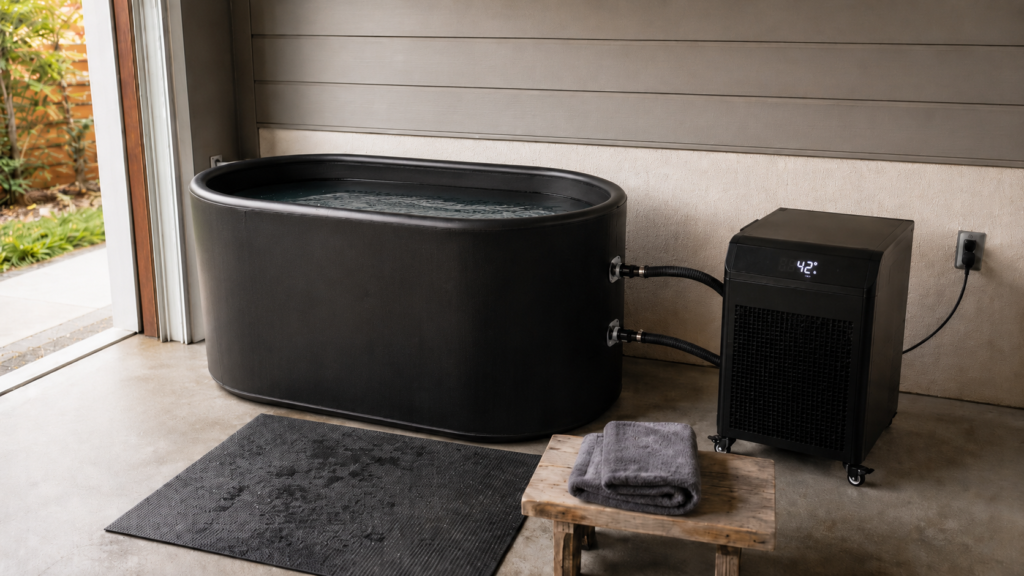
That said, the market has changed. There are now purpose-built options under $1,500 that include everything — tub, chiller, and filter — that didn’t exist a few years ago. The one I’d look at seriously is the Titan Wellness cold plunge tub and chiller bundle. For an additional 5% off, use code SMARTLAB. Their entry-level combo runs around $1,000. Small footprint, portable tub, WiFi control, filtration included. If you’re not the DIY type — or just don’t want the hassle — that $500 premium over a self-build buys you a lot of time and sanity.
What this taught me
Not everything is worth hacking. The cold plunge was — the sauna wasn’t. Knowing where to spend time building vs. just buying is half the battle when you’re trying to put together a setup on a real budget.
The other thing: the creature comforts matter more than I expected. Speakers, red light, a clean interface — these aren’t just nice-to-haves. They’re what make you actually use the setup every day instead of occasionally.
What the science seems to explain
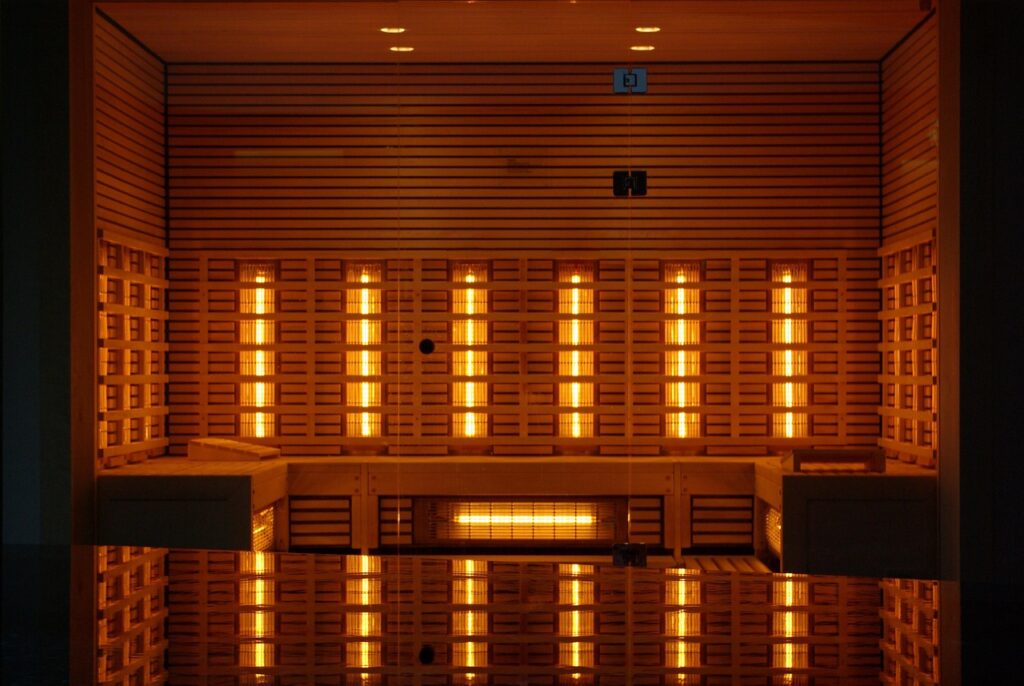
FAR infrared saunas heat the body directly rather than heating the air around you, which is why they operate at lower temperatures than traditional saunas while still producing a deep sweat. Most research on sauna use focuses on traditional high-heat sessions, but emerging evidence suggests FAR infrared produces similar cardiovascular and recovery responses at more comfortable temperatures — useful if you want longer sessions or are just starting out.
Cold water immersion activates the body’s autonomic stress response — heart rate increases, vasoconstriction kicks in, and you get a norepinephrine spike that most people describe as the “alert calm” feeling afterward. The research is strongest for reducing delayed onset muscle soreness and improving mood and mental clarity. The key variable isn’t how cold you can go — it’s consistency. If you’re unsure how long you should actually stay in, here’s a simple breakdown: [how long you should cold plunge]. If you want a deeper breakdown of what actually matters (and what doesn’t), I covered that here: [cold plunge benefits for recovery]
Note: cold water immersion isn’t appropriate for everyone. If you have cardiovascular conditions, consult your doctor before starting a cold plunge practice.
What mattered most (and what didn’t)
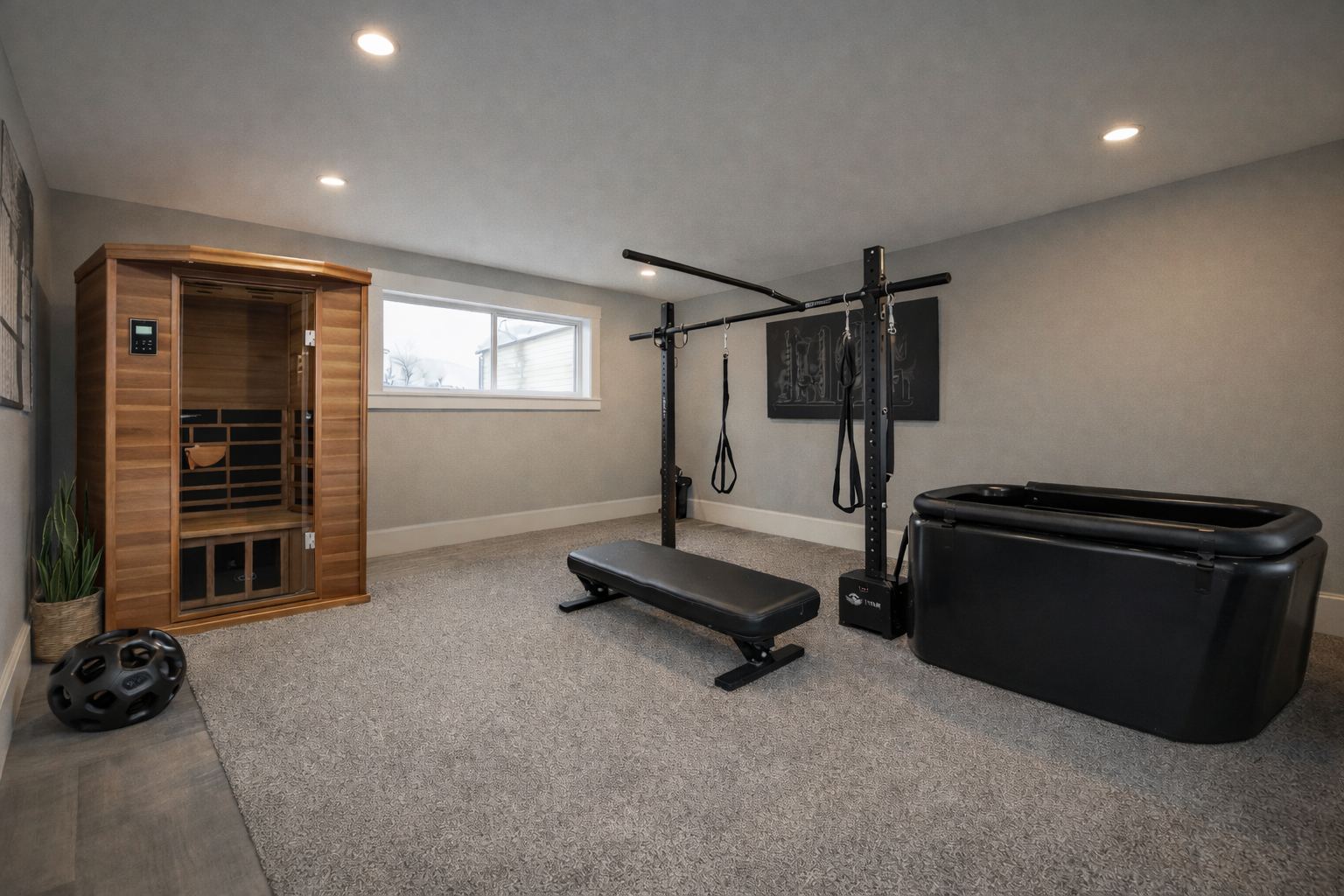
Footprint mattered more than I expected. A 2-person infrared sauna fits in a bedroom, a spare room, or a garage without eating the whole space. The Titan plunge has a small enough footprint that it doesn’t require a dedicated area either.
Energy cost ended up being nearly irrelevant. The $20/month increase for daily sauna use surprised me — I expected more.
WiFi control on the plunge is more useful than it sounds. Being able to pre-chill before you need it means you’re not waiting around.
What I’d do differently
If I were starting over today, I’d probably spend the extra $500 and go with the Titan bundle instead of the DIY freezer conversion — not because the build wasn’t satisfying, but because the purpose-built units are now close enough in price that the time investment is harder to justify.
I’d also check HSA eligibility earlier in the process. I didn’t think about it until after the fact.
Who this is (and isn’t) for
This budget home sauna and cold plunge setup makes sense if you’re serious about daily recovery and want both modalities at home without a five-figure spend. Under $3,500 all-in for sauna and cold plunge is genuinely a good deal for what you’re getting.
It’s probably not for you if you’re testing the waters (no pun intended) and aren’t sure you’ll use it consistently. Start with cold showers or a gym sauna first. Confirm the habit, then invest in the hardware.
If you’re considering this
For the sauna, prioritize low EMF if you’re going to use it daily, and make sure the unit you buy has proper certifications. The Dynamic Saunas Andora hits both and includes red light therapy and Bluetooth as standard — not as an upsell.
For the cold plunge, the Titan Wellness bundle is the budget-to-value sweet spot right now. If you want to go the DIY route, chest freezer conversions absolutely work — just budget more time than you think you’ll need to find the right freezer secondhand.
Combined, the Titan plunge and Dynamic Saunas infrared unit land you under $3,500 for a complete setup. That’s not cheap, but for what it covers, it’s about as good as the budget category gets right now.