The Best At-Home Recovery Setup for Busy Schedules
If you’re busy, recovery usually becomes one of two things:
- A vague idea (“I should stretch more…”)
- A once-a-month panic purchase (“Maybe I need a $4,000 device?”)
Neither one works.
What works is a setup you can actually use when your day is stacked, your energy is low, and you don’t feel like negotiating with yourself.
This is a no-guesswork at-home recovery setup built for busy schedules:
- minimal decisions
- fast sessions
- high consistency
- scales up if you want to go premium later
If you want my short list of tools worth buying (and why), I keep it updated here: Recommended Tools
The goal (so you don’t build the wrong setup)
The best recovery setup isn’t the fanciest one. It’s the one you’ll use 4–6 days per week.
Your at-home recovery setup should do three things:
- Downshift your nervous system (so your body actually recovers)
- Reduce stiffness + soreness (without aggravating things)
- Fit your schedule (busy people don’t “find time,” they build defaults)
If your setup doesn’t create a default… you won’t use it.
Start here: the Minimum Effective Recovery Stack
This is the baseline I’d build for anyone who wants to feel better without turning their house into a wellness showroom.
The 3-item foundation
1) One “anchor” tool: heat or cold
For busy schedules, heat usually wins because it’s easier to stick with consistently.
2) One tissue-work tool (one, not five)
Foam roller or massage gun or lacrosse ball. Pick the one you’ll actually use.
3) A frictionless timer system
Phone timer works, but having a simple timer in the same spot removes mental friction.
That’s the foundation. Everything else is optional.
The 3-tier setup (choose your budget + personality)
Tier 1: The Busy Adult Starter Kit (Budget-friendly, high consistency)
This is for people who want recovery to happen without planning.
Core items
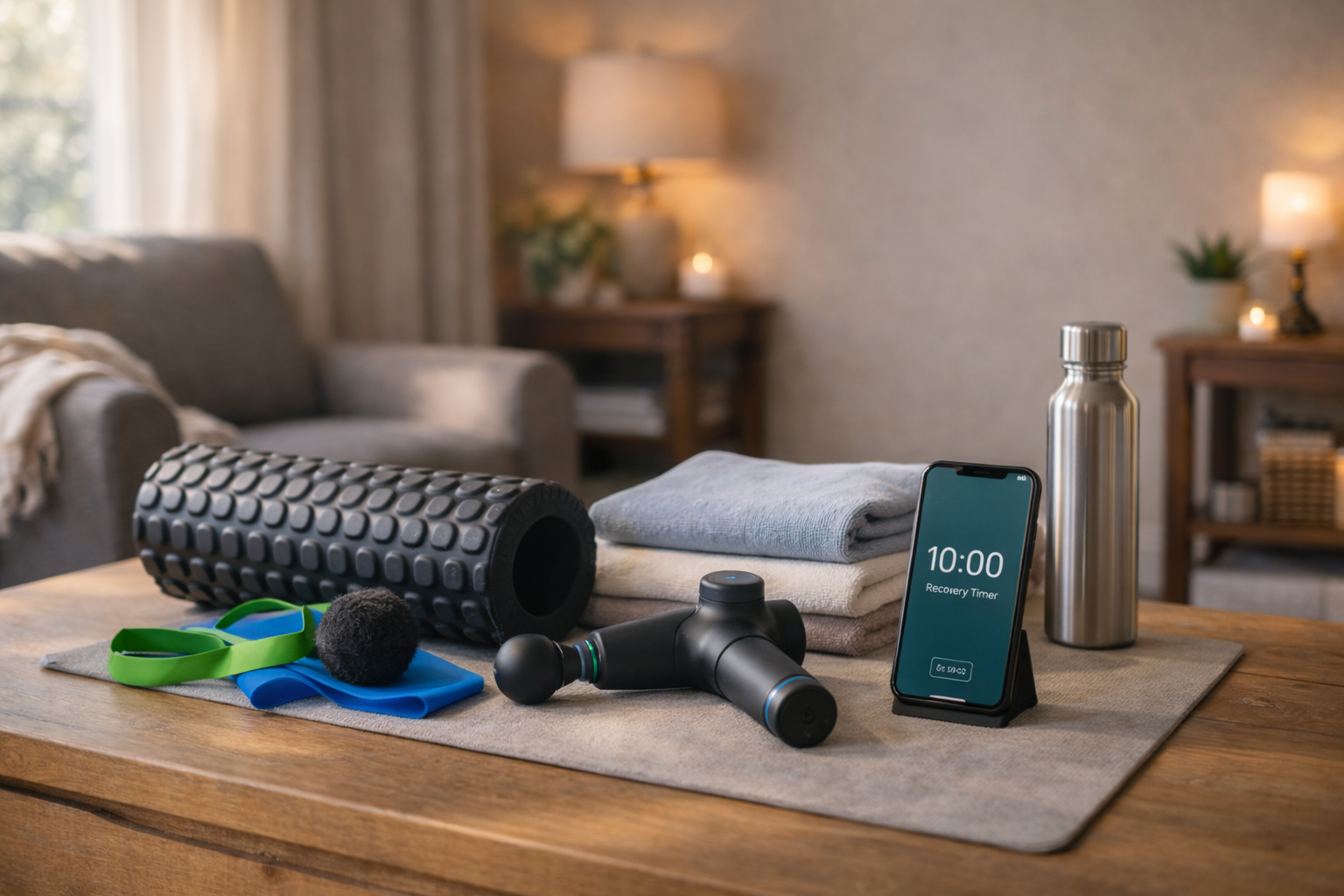
- Foam roller or massage gun (choose one)
- Lacrosse ball (targeted work: feet, glutes, upper back)
- A mat (so you’re not rolling on cold tile)
- Water + towel
- Timer
Why this works:
This tier makes you do something almost every day—which beats the “perfect routine” you do twice a month.
Best use cases
- desk stiffness
- gym soreness
- tight hips / upper back
- you need something that fits in 8–12 minutes
Tier 2: Make Recovery Automatic (Mid-tier, highest ROI)
This is where you add one anchor tool that turns recovery into a routine instead of a chore.
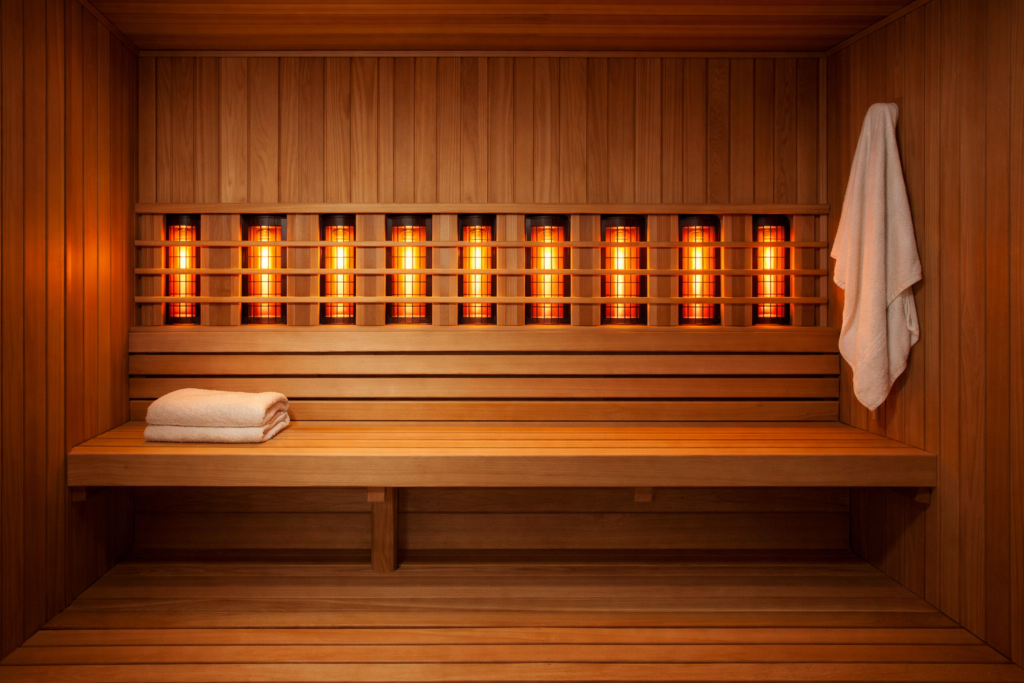
Option A: Infrared sauna anchor (sauna-first default)
Heat is easy to say yes to. If your goal is consistency, sauna usually wins.
What to include in your sauna zone
- towel system (bench towel + sweat towel)
- timer
- water
- simple hook/rack for robe/towel
- optional: small mat outside the sauna
If you’re shopping and want a no-guesswork path, start here:
Best At-Home Infrared Saunas for Recovery (Buyer’s Guide)
Option B: Cold plunge add-on (optional, not required)
Cold plunges can be awesome… if your setup doesn’t annoy you. For busy schedules, cold is best as an add-on once you’ve built consistency with heat.
If you do cold, keep it simple
- non-slip mat + towel
- thermometer
- cover
- basic water-care plan
If you’re newer to cold exposure, start here:
Cold Plunging for Beginners
Tier 3: The Recovery Room Setup (Premium, still simple)
This is where you combine sauna + cold + a few tools—without turning it into clutter.
The premium stack
- infrared sauna
- cold plunge
- massage gun or foam roller
- dedicated shelf: towels, water, timer
Important:
If your recovery area feels messy or annoying to use, you’ll stop using it. Premium setups fail because of friction, not because of “insufficient technology.”
A weekly routine for busy schedules (steal this)
This is a realistic routine that doesn’t require motivation.
The 12-minute default (4–6x/week)
- 2 minutes: slow breathing to downshift
- 6 minutes: tissue work (upper back + hips)
- 4 minutes: heat or a short cooldown walk/stretch (optional)
If you have an infrared sauna:
- 15–25 minutes, 2–4x/week (start at the low end)
If you add cold plunge later:
- 2–6 minutes, 2–4x/week (based on tolerance and safety)
You don’t need long sessions. You need repeatable sessions.
What mattered most (and what didn’t)
What mattered most
- convenience
- one anchor tool (sauna-first for busy schedules)
- predictable routine (same days, same time)
- hydration + cooldown
What didn’t matter as much as people think
- owning 10 different gadgets
- perfect temperature ranges
- complex protocols you can’t stick to
How to choose what to buy without wasting money
This is where most posts turn into product dumping. We’re not doing that.
Step 1: Decide your anchor (heat vs cold)
- stiffness, stress, sleep, general soreness → sauna
- mood boost, “reset,” post-workout punch → cold plunge
- if you hate maintenance → sauna is usually the safer bet
Step 2: Choose one tissue-work tool
- simple + cheap: foam roller + lacrosse ball
- convenience: massage gun
- if joints are cranky: go gentle, don’t crank on joints
Step 3: Buy accessories that remove friction
Spend money on:
- mat
- towel system
- timer
- (if cold) thermometer + cover
…before you buy random “recovery gadgets.”
If you want my exact picks, they’re here → Recommended Tools
Safety note
If you have cardiovascular issues, blood pressure problems, pregnancy, or medical conditions, talk to your clinician before using extreme heat/cold. Don’t turn recovery into punishment.