Infrared Sauna vs Traditional Sauna for Recovery: Which Makes More Sense?
If you’re comparing infrared sauna vs traditional sauna for recovery, here’s what actually matters.
You’re trying to recover better.
You want less soreness. Less stiffness. Better sleep. And you don’t want to waste money on something that looks cool but doesn’t fit your actual life.
I’ve used both styles. I like both. They feel very different.
But they are not equal in terms of practicality, setup, and long-term commitment.
When comparing infrared sauna vs traditional sauna, the difference isn’t just heat style — it’s how each fits your recovery routine and lifestyle.
Let’s break this down clearly.
Who This Comparison Is For (And Who It Isn’t)
This is for you if:
- You work out consistently
- Recovery is starting to feel like the bottleneck
- You’re considering adding a sauna at home
- You care about time, cost, and long-term sustainability
This is NOT for you if:
- You just want the “hottest” trend
- You’re chasing extremes
- You expect one session to fix everything
Recovery is a commitment. Heat is just a tool.
How I Evaluated These
I didn’t evaluate these based on spa vibes.
I looked at:
- Heat experience
- Setup time
- Ongoing management
- Cost (upfront + long-term)
- Practicality around workouts
- Recovery consistency
- Features that actually matter
And I factored in one real-world variable most people ignore:
Time.
Because once you factor in your actual workouts, your family, your job — recovery time matters.
Quick Comparison Table
| Option | Best For | Key Strength | Main Trade-Off | Price Range |
|---|---|---|---|---|
| Infrared Sauna | Busy home users | Fast setup, efficient sessions | Slower heat build | $$–$$$$ |
| Traditional Sauna | Full immersion lovers | Immediate intense heat | Cost, install, longer heat prep | $$$–$$$$$ |
The Experience: What They Actually Feel Like
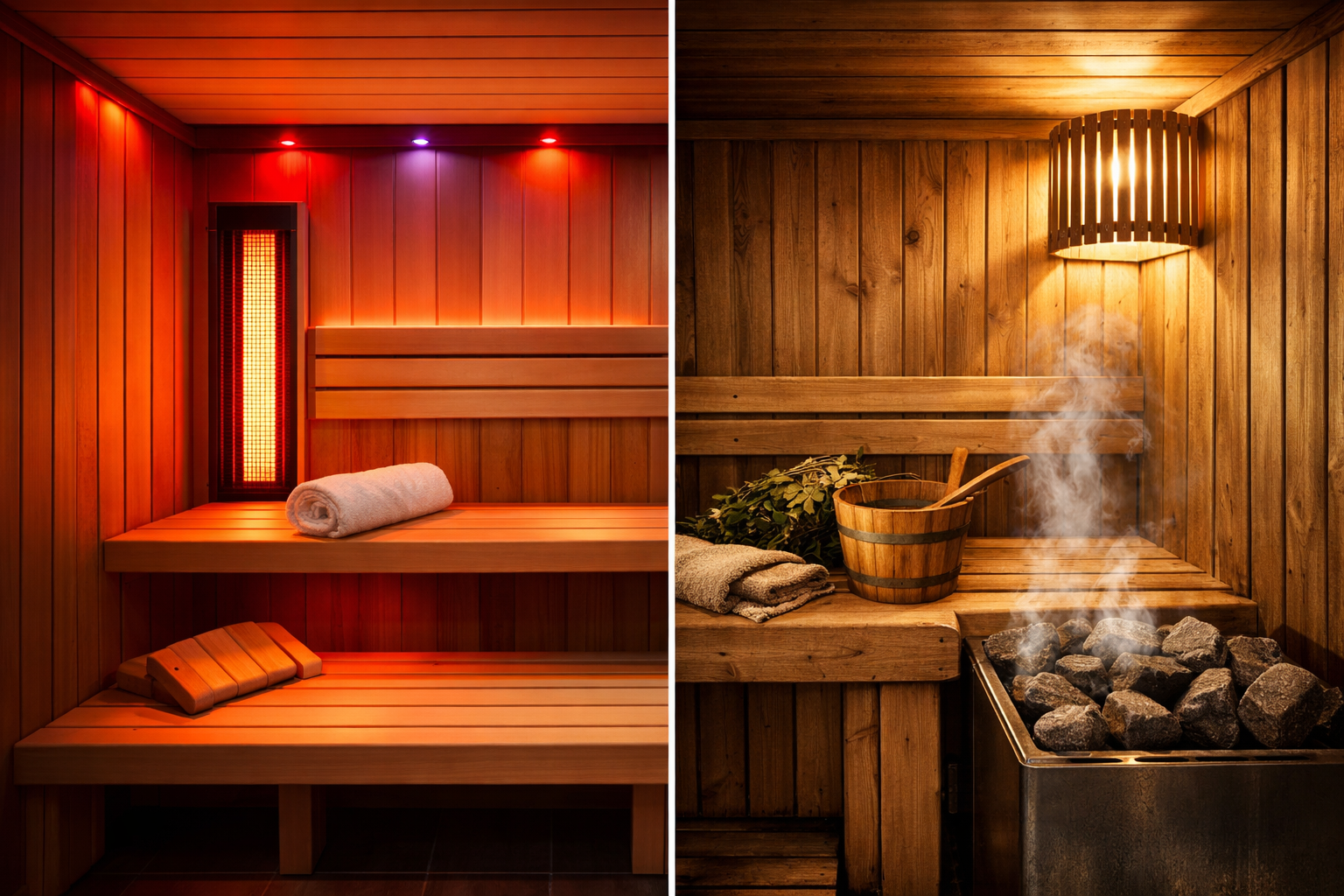
Traditional Sauna
It hits you immediately.
That dry, heavy, intense heat. Or if you’re adding steam — that full-body wall of warmth.
If money and time weren’t factors, I love the thought of this setup. There’s something primal and satisfying about it.
But here’s the reality:
- Longer heat-up time
- More complex installation
- Often higher electrical requirements
- More maintenance
- Larger footprint
And if you want built-in tech like red light or speakers? You usually have to search for it or upgrade.
It’s doable — but it’s more of a project.
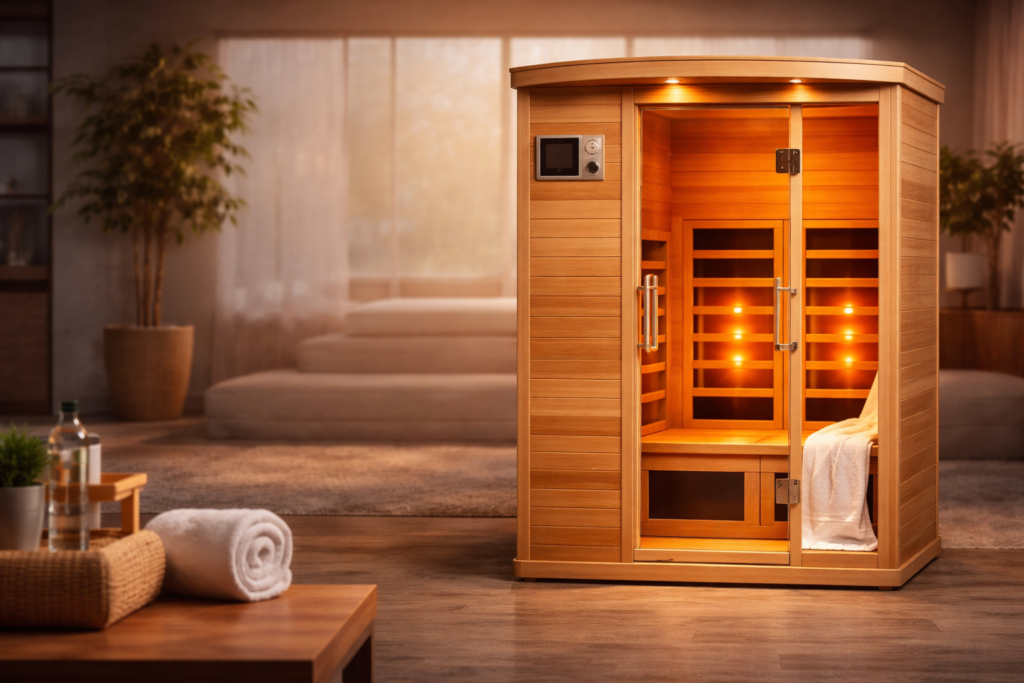
Infrared Sauna
Infrared is more of a slow burn.
It doesn’t slap you in the face with heat. It builds gradually.
But here’s what matters:
- Most quality units heat up in about 20–30 minutes
- Sessions are efficient (20–40 minutes)
- Dry heat
- Lower operating temps
- Plug-and-play options available
- Many include red light therapy and built-in speakers standard
From a consistency standpoint?
It’s easier to use regularly.
And consistency beats intensity.
Best Infrared Sauna For Practical Recovery
If you’re building a home recovery system, infrared makes more sense for most people.
Brands like Sun Home Saunas offer solid build quality and red light integration, and they align well with recovery-focused setups.
If budget is tighter, there are reputable options through Amazon that still allow you to get started without overcommitting.
Key things to look for:
- Full-spectrum heaters (not just far infrared)
- Adequate wattage
- 110v plug compatibility (if you don’t want electrical upgrades)
- Warranty clarity
- Real customer reviews, not marketing fluff
Avoid:
- Claims about “detox miracles”
- Units with weak heater coverage
- Overpriced aesthetic upgrades
Best Traditional Sauna For Immersion
If you:
- Have space
- Don’t mind install complexity
- Love intense heat
- Want that classic steam experience
Then traditional wins on feel alone.
But understand the trade-off:
It’s more of a commitment — financially and logistically.
And if you’re only using it twice a month because it’s a hassle?
That defeats the purpose.
What Actually Matters (And What Doesn’t)
What Matters
- Consistency
- Hydration
- Time commitment
- Sleep impact
- Electrical setup
- Recovery integration with workouts
What Doesn’t
- How extreme it feels
- Marketing detox language
- Celebrity endorsements
- Overcomplicated add-ons
The best sauna is the one you’ll actually use 3–4 times per week.
What the Science Suggests (Briefly)
Heat exposure appears to:
- Increase circulation
- Promote relaxation
- Support parasympathetic activation
- Potentially reduce perceived muscle soreness
Much of the strongest research historically focuses on traditional saunas, but emerging research on infrared shows similar recovery-supporting trends.
What’s clear:
Regular heat exposure > occasional extreme exposure.
Recovery benefits depend heavily on frequency.
One Non-Negotiable: Hydration
This part gets ignored.
You are stressing your body.
You need:
- Water
- Electrolytes
- More intake than normal training days
If you’re not replacing fluids, you’re sabotaging the recovery effect.
If You’re Deciding Between These
Choose infrared if:
- You want plug-and-play
- You value time efficiency
- You want integrated red light + audio
- You care about practicality
If you’ve already decided infrared fits your lifestyle better, here’s my breakdown of the best home infrared sauna options and what actually separates them.
Choose traditional if:
- You love intense heat
- You want steam
- Budget and installation aren’t issues
- You’re committed to the setup
At the end of the day?
Both work.
Both support recovery.
But recovery is already a time commitment.
Pick the option that fits your real life — not your fantasy setup.